
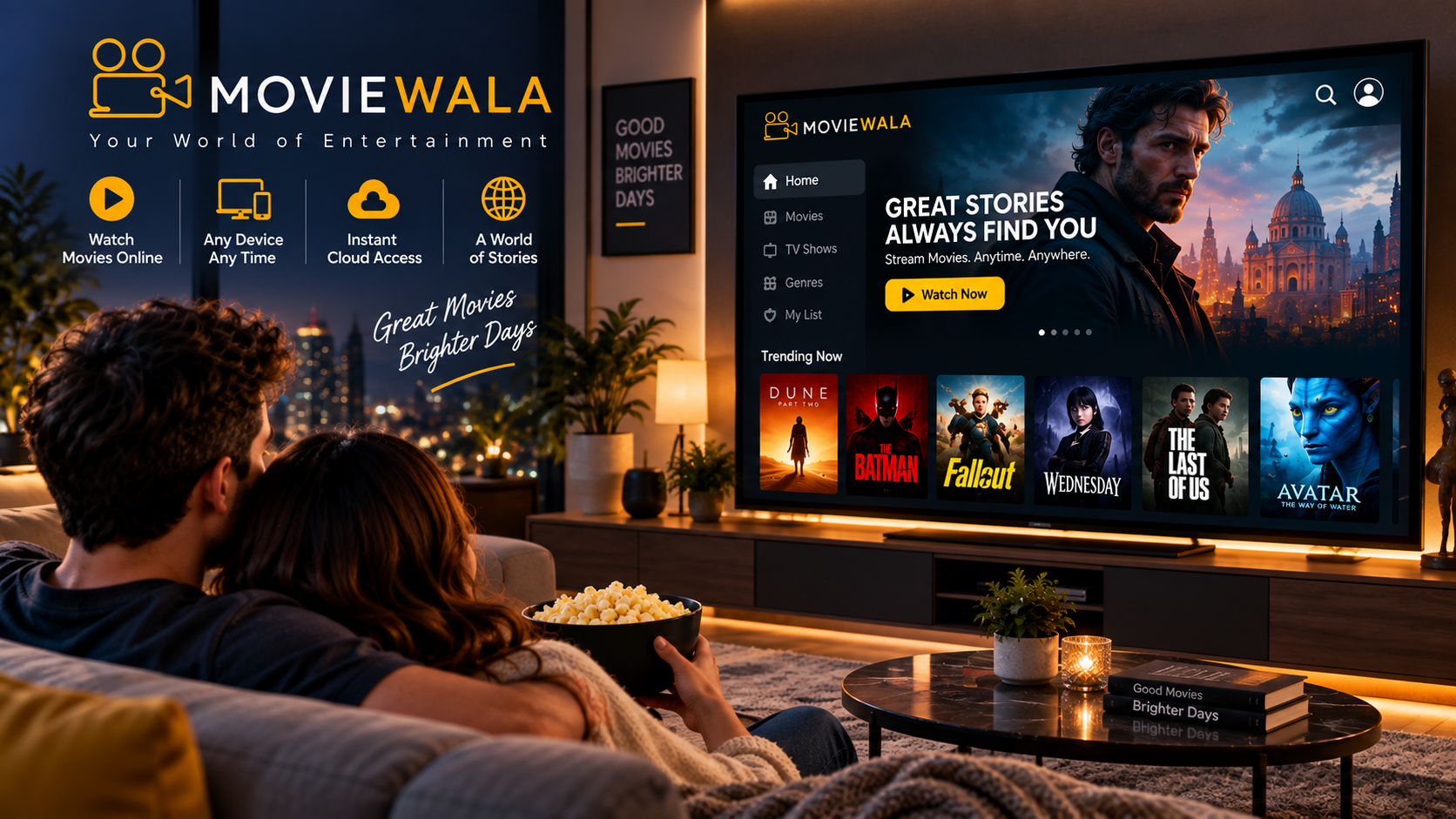
The way audiences access entertainment has changed quietly but fundamentally. Physical media, fixed television schedules, and personal DVD collections once shaped when and where a viewer could watch something. Modern streaming has replaced much of that logistical effort with cloud-based access, allowing entertainment to fit around everyday routines rather than requiring routines to be organized around programming. For students moving between classes, professionals with irregular schedules, or families sharing different devices throughout the day, the ability to open a browser and immediately explore a digital catalog provides a level of flexibility that traditional formats could not easily match. Within this environment, Moviewala presents a straightforward destination to watch movies online, combining direct access with a clean viewing experience designed to minimize unnecessary steps.
The distinction is particularly noticeable in the transition from ownership to accessibility. A physical collection requires storage, maintenance, and compatible equipment, while scheduled television depends on broadcasters deciding what appears and when. Cloud streaming changes that relationship by placing the catalog within reach whenever the viewer chooses to use it. There is no need to wait for a particular broadcast window or locate a disc before starting a session. The shelf itself becomes the point of entry, with content available through an immediate selection and playback process that keeps attention on entertainment rather than administration.
Entertainment Free from Traditional Programming Constraints
On-demand viewing has effectively transferred scheduling control from broadcasters to audiences. Instead of adjusting personal plans around a television timetable, viewers can decide when an entertainment session begins and how long it lasts. This flexibility is especially relevant in an environment where leisure time is increasingly fragmented. A short evening window, a relaxed weekend afternoon, or an unplanned break can all become suitable moments for streaming without requiring advance preparation.
A clean catalog interface strengthens this freedom because discovery becomes part of the viewing experience rather than an obstacle before it. Moviewala’s approach emphasizes direct movement from the digital shelf toward playback, avoiding unnecessary registration walls and keeping the route to entertainment uncomplicated. The absence of intrusive pop-ups also contributes to a calmer interface, allowing viewers to browse without repeatedly closing distractions or navigating through layers of promotional interruptions. In practical terms, this creates a more natural sequence: enter the catalog, find something relevant, select it, and begin watching.
This model also changes how audiences perceive digital libraries. A catalog no longer needs to feel like a database that demands technical knowledge from the user. Clear categories and accessible presentation can make a substantial collection feel approachable, whether someone arrives with a particular preference or simply wants to browse. The result is an entertainment environment where discovery remains flexible and where the viewer retains control over the pace of the session.
Multi-Device Synchronization and Interface Usability
Contemporary streaming is no longer tied to one screen. Smart televisions provide a large-format viewing environment at home, while laptops offer convenient access from workspaces or study areas. Tablets and smartphones extend that flexibility further, making digital entertainment accessible when users are away from a television. Supporting this range of devices requires responsive interfaces capable of adapting navigation, presentation, and playback controls to different screen dimensions and input methods.
The most effective streaming experiences make those transitions feel almost invisible. A viewer may begin browsing on a smartphone, continue on a laptop, and later move to a television without feeling that the service has fundamentally changed. Consistent navigation and playback behavior help preserve familiarity across devices. Where viewing-progress synchronization is supported, the transition can become even smoother because users are not forced to reconstruct their place manually each time they change screens.
Interface organization is equally important as catalogs grow. Traditional alphabetical menus can become cumbersome when audiences are faced with large volumes of digital content. Modern categorization, filters, search functions, and curated shelves provide a more useful alternative by allowing viewers to approach the catalog according to their current intent. Someone can browse broadly without a fixed destination, while another user can narrow the environment quickly through relevant categories. This balance between exploration and precision is central to making a large streaming library feel manageable.
For Moviewala, usability is therefore not simply about visual presentation. It is about reducing the distance between discovery and playback. High-quality streaming, an uncluttered interface, direct shelf access, and the absence of sign-up barriers all contribute to a viewing environment where the technology remains largely in the background.
Infrastructure, Playback Consistency and Future Trends
Behind a simple play button lies a substantial technical ecosystem. Modern streaming services rely on distributed cloud infrastructure, content delivery networks, adaptive bitrate technologies, and sophisticated compression methods to move audiovisual data efficiently between servers and viewers. These systems are designed to respond to changing network conditions, balancing image quality with available bandwidth so that playback can remain stable across different connections and devices.
Network optimization is particularly important because internet conditions are rarely identical from one session to another. Congestion, wireless interference, device limitations, and regional infrastructure can all affect performance. Adaptive delivery technologies help address these variations by dynamically adjusting the stream rather than treating every connection as though it had identical capacity. Efficient encoding and caching can further reduce the amount of data that needs to travel long distances repeatedly, contributing to faster delivery and fewer interruptions.
The next stage of streaming will likely focus on making this infrastructure even less visible. Expanded cloud networks, more efficient codecs, intelligent content delivery, and increasingly refined personalization systems can make catalogs easier to navigate while improving consistency across geographical regions and device types. Personalization may also become more contextual, helping interfaces respond to viewing habits without turning the experience into an overly complicated recommendation system.
The essential appeal remains remarkably simple. A modern streaming platform does not need to make entertainment feel technical. The viewer can arrive at the home screen, explore a category, select a title from the shelf, and press play. When the interface is clean, playback is dependable, quality is high, and unnecessary registration barriers and pop-ups are kept out of the way, the catalog can handle the complexity behind the scenes while the audience simply gets on with watching.