
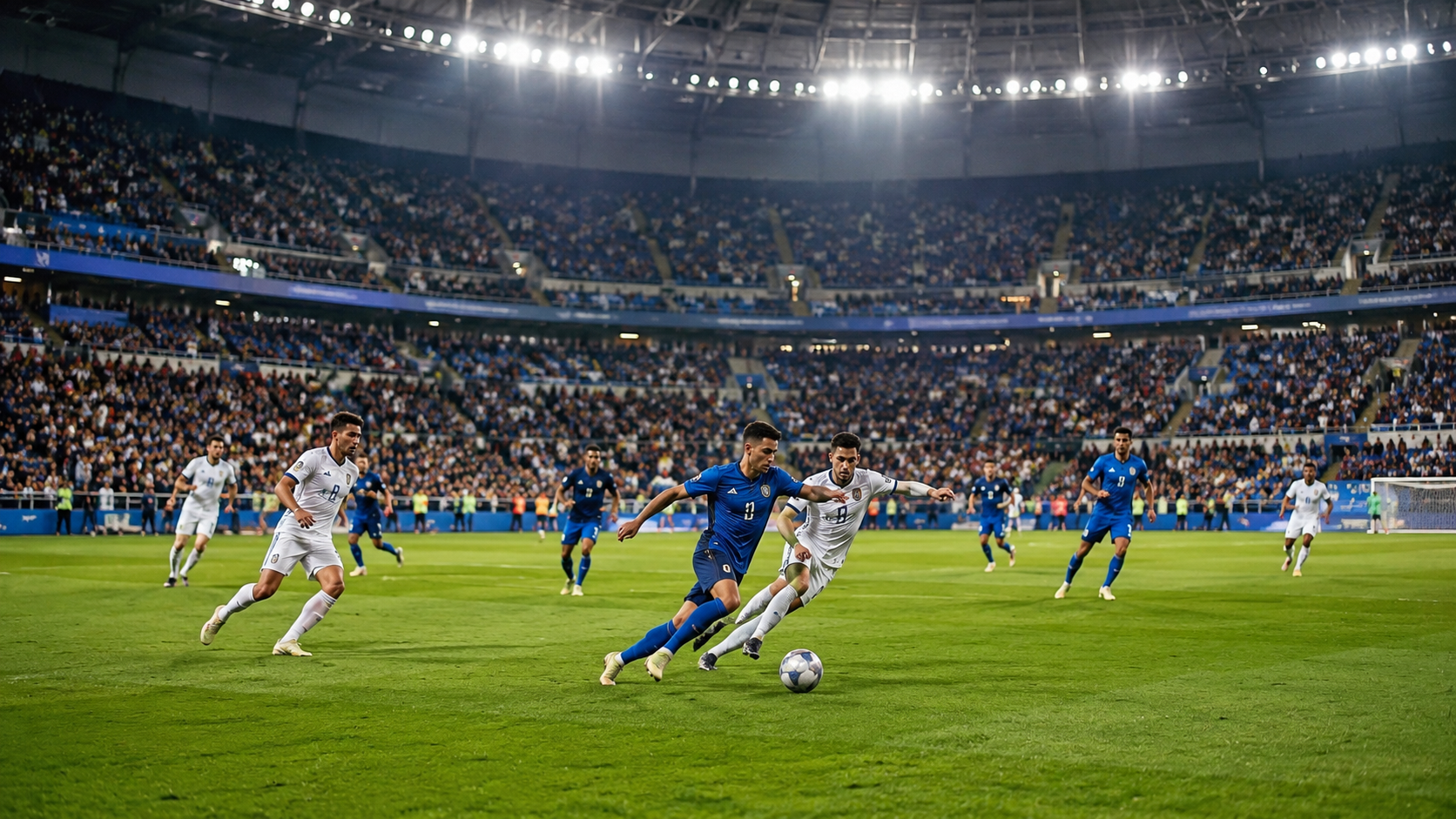
For dedicated football supporters, an ordinary day can become an exciting sequence of sporting events. A domestic league fixture may be followed by a continental competition, while an international match or an important cup encounter can provide another reason to stay connected with the game. With so many competitions taking place throughout the year, футбольные трансляции сегодня have become a natural part of how fans organise their time and discover the matches that deserve their attention.
Modern football audiences rarely follow just one team or tournament. A supporter might keep track of a favourite club, watch the progress of a national side and remain interested in several international leagues. This creates a much wider viewing experience, where every day can bring a different combination of rivalries, tactical approaches and unexpected results.
The challenge is no longer simply finding a match to watch. It is deciding which stories are worth following and understanding how each fixture fits into the wider football calendar.
The Match Calendar Has Become Part of Football Culture
Football used to be more closely associated with a particular weekend routine. Supporters knew when their domestic teams were likely to play and planned their free time around familiar broadcast schedules. The modern calendar is considerably more varied.
League fixtures are spread across several days, continental competitions introduce midweek encounters, and domestic cup tournaments create additional opportunities for teams to meet. International breaks bring national sides into focus, while preseason matches provide an early look at new squads and tactical ideas.
This variety gives supporters more opportunities to explore the sport. Someone who normally follows one domestic league may discover an interesting competition in another country simply because its match takes place at a convenient time.
The calendar also creates connections between fixtures. A team’s performance in a league match may influence its approach to a cup encounter a few days later. A demanding continental fixture can affect the manager’s selection for the following weekend. Understanding these relationships makes it easier to appreciate why certain matches matter beyond their immediate result.
Football is therefore best understood not as a collection of isolated events but as a continuous season in which every competition contributes to the larger picture.
Choosing the Matches That Matter Most
When several fixtures take place on the same day, supporters often have to make decisions about where to focus their attention. The most obvious choice may be a match involving a favourite club, but other factors can make a fixture equally interesting.
League position is one consideration. A meeting between teams competing for the title can have major consequences, while a match involving clubs near the bottom of the table may be just as important because of the pressure surrounding the result.
Recent form provides another perspective. A team that has struggled for several weeks may approach an upcoming fixture with a different mentality from one enjoying a successful run. Injuries, suspensions and changes in the starting line-up can also influence expectations.
Rivalries add an emotional dimension. A local derby may attract attention even when the teams occupy different positions in the standings. Previous meetings, historical disagreements and the importance of local identity can make these matches particularly intense.
Some supporters prefer to choose fixtures according to playing style. They may be interested in teams known for attacking football, high pressing or carefully organised defensive systems. Others enjoy watching emerging players or following managers who are introducing new tactical ideas.
There is no universal formula for choosing a match. The most rewarding fixture is often the one that offers a compelling story, regardless of the teams involved.
Why the Opening Minutes Deserve Attention
It is tempting to concentrate on goals and major incidents, but the early stages of a football match can reveal important information about both teams.
The opening minutes often show how managers intend to approach the contest. A side may begin with aggressive pressing, attempting to force mistakes in the opponent’s defensive third. Another may prefer a patient approach, keeping possession and waiting for opportunities to move forward.
The positioning of midfielders can be particularly revealing. If a defensive midfielder drops between the centre-backs, the team may be trying to create additional passing options. If the wide players move closer to the centre, the full-backs may be expected to provide width.
These details help explain the rhythm of the game. A team that appears cautious may simply be waiting for the right moment to increase the tempo. An opponent that presses intensely in the first ten minutes may later conserve energy and defend in a more compact formation.
Watching from the beginning makes these developments easier to understand. Rather than seeing only the final outcome, supporters can follow the tactical decisions that shaped the match.
The Importance of Squad Depth Across a Busy Season
A crowded football calendar places significant demands on players. Clubs competing in domestic leagues, cup tournaments and continental competitions may have to manage several important fixtures within a short period.
This makes squad depth a central part of modern football strategy. Managers need more than a strong starting eleven. They must have alternative players capable of maintaining performance levels when regular starters are unavailable or need additional recovery time.
Rotation can sometimes produce unexpected results. A young midfielder may receive an opportunity because an experienced player is being rested. A reserve forward may become particularly important after an injury, while a versatile defender can help the team adapt to different opponents.
For supporters, following several matches across a season can reveal how a squad develops. The importance of certain players becomes clearer over time, and tactical changes can often be understood in the context of the team’s wider schedule.
A difficult result does not always indicate a decline in quality. Fatigue, injuries and the demands of competing on several fronts can influence performances. Understanding the calendar provides useful context for evaluating a team’s progress.
Technology Behind the Modern Football Schedule
Digital technology has made it easier to follow football across different competitions and devices. Match information can be organised through online calendars, notifications and sports interfaces, helping supporters keep track of upcoming fixtures and changes to schedules.
The delivery of live video also relies on several technical systems. Adaptive bitrate streaming allows a compatible player to adjust video quality according to the viewer’s internet connection. If network conditions become weaker, playback can move to a lower bitrate to reduce interruptions. When the connection improves, a higher-quality version can become available.
Content delivery networks support this process by distributing video through servers in different locations. This helps manage demand when large audiences follow popular matches at the same time.
Mobile compatibility is another important part of the experience. Supporters may use a television for a major weekend fixture, a laptop during an evening match or a smartphone when they are away from home. A well-designed viewing environment should remain understandable across different screen sizes.
These technologies do not change the rules or character of football, but they make it easier to follow the sport within modern daily routines.
Following More Than One Competition
One of the most enjoyable aspects of the football calendar is the opportunity to compare different competitions. Each league has its own history, traditions and tactical influences, and following several of them can broaden a supporter’s understanding of the sport.
The English Premier League offers a wide range of playing styles and an intense competitive environment. Spanish football is associated with technical quality and varied approaches to possession. Italian competitions have a long tactical tradition, while German football often attracts attention for its energetic transitions and attacking movement.
International club competitions introduce another level of variety. Teams from different countries meet with contrasting football cultures, creating tactical challenges that are not always present in domestic fixtures.
National-team tournaments offer a different experience. Players who normally represent separate clubs come together for a limited period, and coaches must establish an effective collective approach within a short preparation window.
Following these competitions helps supporters discover unfamiliar players, recognise emerging tactical trends and appreciate how football continues to evolve in different environments.
The Social Side of a Busy Football Day
A full day of football can become a social occasion. Friends may gather to watch an important derby, family members may follow their national team together, and groups of supporters can exchange opinions about several matches throughout the day.
These conversations are part of the experience. Before kick-off, people discuss likely line-ups and possible outcomes. During the game, attention turns to controversial decisions, missed opportunities and unexpected changes in momentum. Afterwards, the discussion moves towards individual performances and what the result might mean for the next fixture.
Digital communication has made these exchanges easier to maintain even when supporters are watching from different locations. A shared interest in one club or competition can connect people who might otherwise have little opportunity to interact.
However, a busy football schedule also makes it important to choose when to concentrate on the match itself. Constantly switching between fixtures and discussions can make it difficult to appreciate the details of any single game.
Some viewers therefore prefer to select one main match and follow it carefully, checking other results afterwards. Others enjoy moving between several competitions. Both approaches are part of the flexibility of modern football culture.
Why Unexpected Results Make the Calendar Interesting
A football schedule can look predictable before the matches begin. Stronger teams may appear to have favourable fixtures, and recent results can influence expectations. Yet the sport regularly challenges these assumptions.
An underdog may defend with exceptional discipline and find an opportunity on the counterattack. A favourite may struggle to create chances against a compact opponent. A late substitution can change the balance of a match, while an individual mistake can overturn an otherwise controlled performance.
These possibilities are what make every fixture worth approaching with an open mind.
Unexpected results also influence the wider season. A surprising victory can change a team’s confidence, affect the standings and create new possibilities for the matches that follow. A defeat may force a manager to reconsider the team’s approach or give opportunities to players who have spent more time on the bench.
The football calendar is therefore full of interconnected stories. One result can influence expectations for several upcoming fixtures, making the wider season more interesting than any single match.
Making Every Matchday Count
A successful football day does not necessarily require watching every available fixture. It is more about finding the right balance between following favourite teams, discovering new competitions and enjoying the moments that make the sport memorable.
Some matches deserve attention because of their importance in a title race. Others are interesting because of a historic rivalry, an emerging player or an unusual tactical contest. Even a relatively low-profile fixture can offer an excellent performance or an unexpected story.
The modern football calendar provides enough variety for different interests and viewing habits. Technology has made access more flexible, while the growing diversity of competitions gives supporters more reasons to explore the sport beyond familiar teams.
Every matchday brings another set of possibilities. A routine league fixture can become a dramatic encounter, a young player can announce themselves to a wider audience, and an unexpected result can change the direction of an entire season.
That is the enduring appeal of following football throughout the day: the schedule provides the framework, but the stories are written on the pitch.